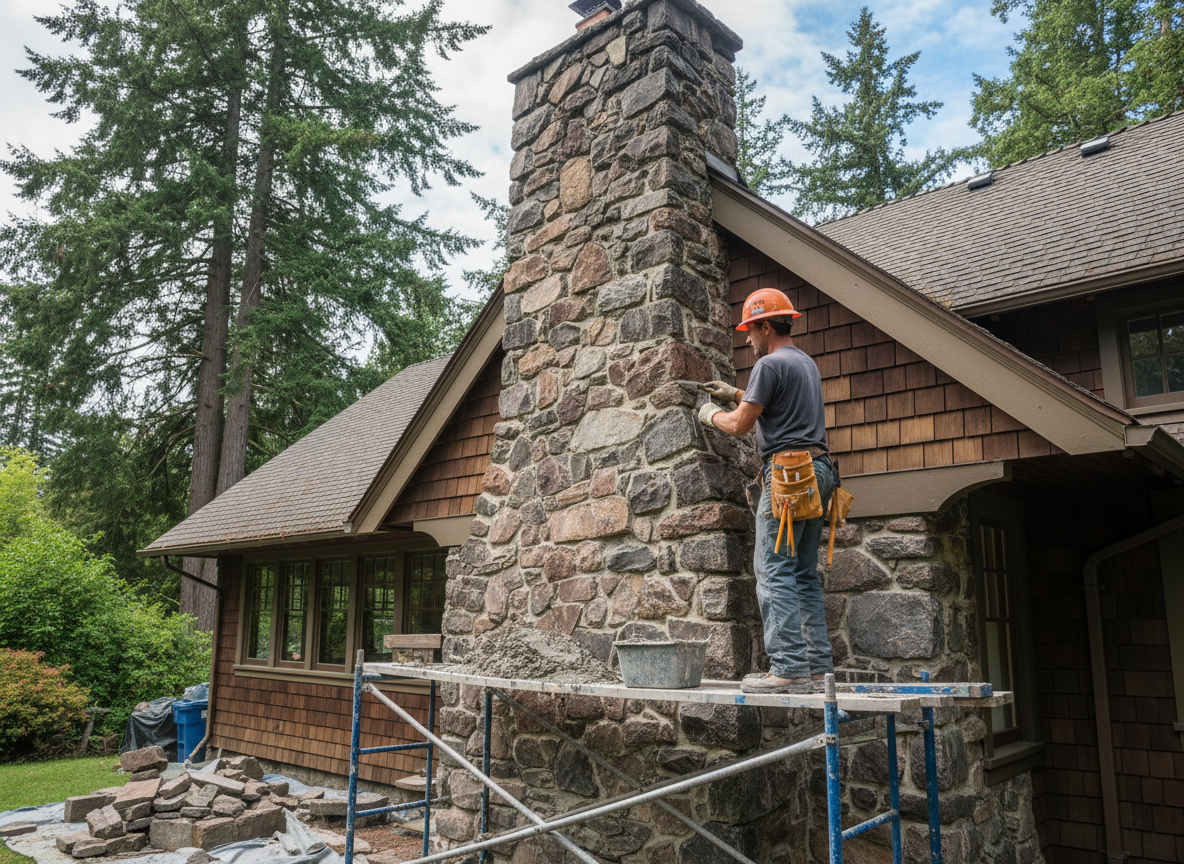
Stone chimneys in Gresham face constant stress from wet winters that bring repeated freeze-thaw cycles and occasional flooding. Homes in Rockwood and Downtown often date to the mid-20th century with original stonework set in lime mortar that softens when water sits against the flue. Portland’s proximity means many of these chimneys also carry heavy creosote loads from wood stoves used during mild summers, accelerating joint breakdown once moisture enters. Repair work here starts with removing loose stone and deteriorated mortar rather than surface patching, because water trapped behind the face stone will push the repair apart within one season.
Edge cases appear near Gresham Pioneer Cemetery where older foundations sit on slightly higher ground yet still collect runoff from surrounding slopes. In these spots the chimney base often shows spalling on the north face only, the side that stays shaded and damp longest. Technicians must sometimes rebuild the lower three courses with new through-stones rather than attempting tuck-pointing, especially when floodwater has undermined the footing. Code compliance in Multnomah County requires maintaining proper clearance to combustibles when any flue liner is disturbed, so repairs frequently include a stainless-steel liner sleeve even if the original clay liner remains intact.
Homeowners in neighborhoods bordering Mt. Hood Community College frequently request work after noticing white efflorescence on interior walls during spring. This staining signals water traveling through the stone and depositing minerals inside the house. The fix involves both exterior repointing with a NHL 3.5 mortar matched to the original aggregate and installation of a custom drip edge at the crown to break the water path. Skipping the crown detail guarantees the same moisture issue returns the following winter.
Seasonal Guidance
Wet winters in Gresham make fall the only practical window for stone chimney repair. Once temperatures drop below freezing, new mortar cannot cure properly and will crack before it sets. Scheduling work after the first hard rain but before sustained cold allows the crew to identify all active leaks while the stone is still wet and workable.
Technician insight
In Gresham, the thing that catches most people out with stone chimney repair is how wet winters and occasional flooding in Multnomah County push water behind the stone on the north face of older Rockwood homes, so surface repointing alone fails within a year unless the crown and flashing are addressed at the same time.
Downtown Gresham Stone Chimney Water Intrusion
Problem: homeowner noticed interior wall staining after heavy winter rain. What we found: open mortar joints on the north side allowing water to travel behind the stone and exit inside the attic. What we did: removed loose stone, repointed with NHL 3.5 mortar, rebuilt the crown with a drip edge, and resealed flashing. Outcome: staining stopped and the chimney remained dry through the next wet season.
How it works
- 1
Site Assessment
Inspect all four sides of the stone stack from roof level, checking for open joints, spalled faces, and water staining at the intersection with the roof flashing.
- 2
Mortar and Stone Removal
Cut out failed mortar to a minimum 3/4 inch depth and remove any cracked or loose stone, preserving sound material where possible.
- 3
Rebuild and Repoint
Reset or replace stones using NHL 3.5 mortar mixed with local sand to match existing color and texture, then tool joints for proper water shedding.
- 4
Crown and Flashing Detail
Install a new concrete or stone crown with drip edge and reseal roof flashing to prevent water entry at the roofline.
Pricing
Upfront quotes provided after on-site inspection; cost driven by extent of stone replacement and access on two-story homes common in Rockwood.