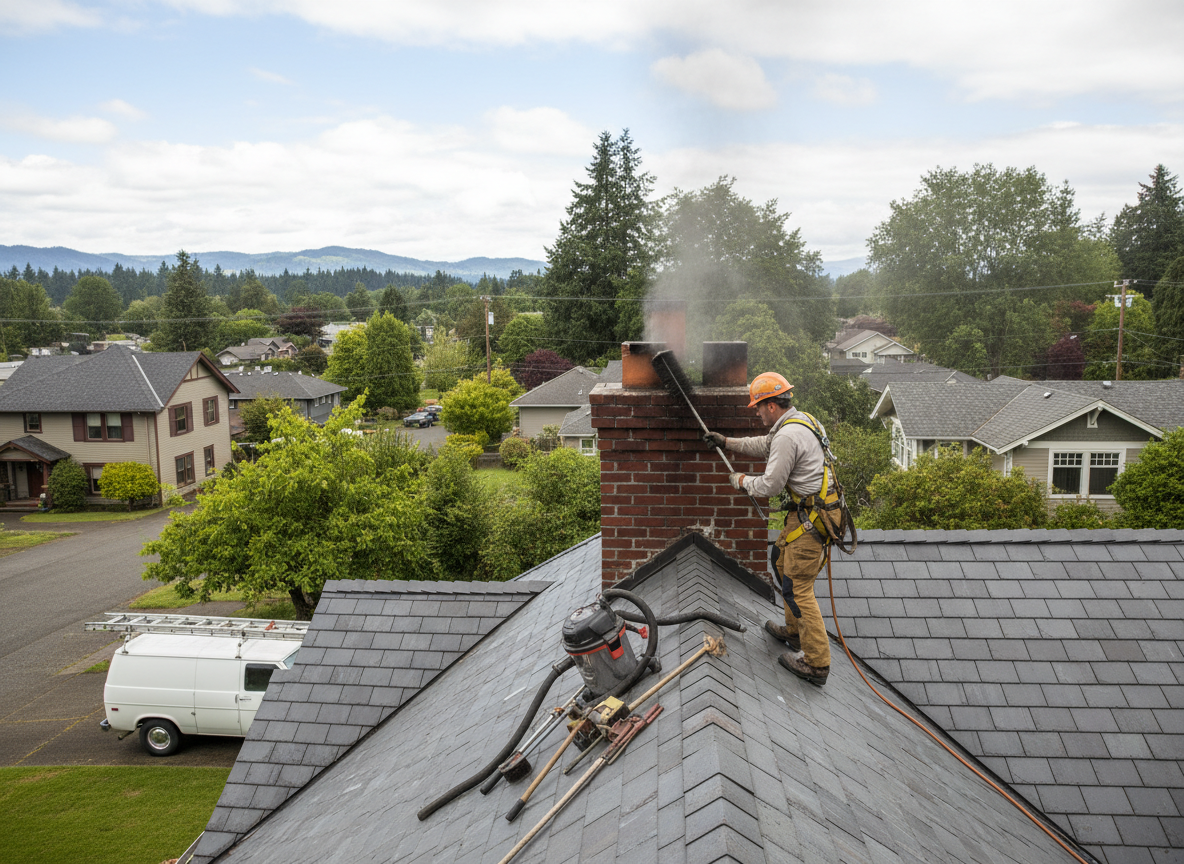
Gresham homes built before the 1980s in Rockwood and Downtown often feature masonry chimneys that absorb moisture during the county's extended wet winters. Water enters through cracked crowns or deteriorated flashing and travels down flues, accelerating spalling in brickwork near the Gresham Pioneer Cemetery area where older stock sits on heavier soils. Routine maintenance focuses on clearing creosote before mild summers turn to another wet season, preventing the interior staining and draft loss that Portland commuters notice first when wood stoves are lit.
Flooding events along low-lying streets near Mt. Hood Community College push groundwater against foundations and can saturate chimney bases that lack proper weep holes. Technicians check for efflorescence on flue tiles and test damper operation because even small amounts of standing water promote rapid corrosion of metal components. Multnomah County permitting rules require documented inspections when repairs exceed simple cleaning, so maintenance visits include written notes on liner condition and crown integrity that homeowners can reference for future insurance or sale needs.
Seasonal Chimney Care
Wet winters here demand earlier scheduling than in drier parts of Oregon. Homeowners who wait until first frost often face longer wait times and risk carbon monoxide issues once stoves are in daily use. Mild summers provide the best window for sealing and minor tuckpointing before the next rain cycle begins.
Technician insight
In Gresham the thing that catches most people out with chimney maintenance is how quickly rainwater from our wet winters travels down the flue and saturates the base in Rockwood homes built on older foundations; once that happens the mortar starts crumbling from the inside out and you lose draft before you even notice the staining.
Rockwood Base Saturation
Homeowner in Rockwood reported slow draft on first cold snap. Inspection found water pooled at the smoke chamber base after recent flooding. Crew cleared saturated creosote, installed new weep holes, and sealed the crown. Draft returned to normal and no further moisture entered during the remaining winter rains.
How it works
- 1
Site Assessment
Technician examines exterior masonry, crown, flashing, and interior flue from the roofline down to the smoke chamber, noting water staining or creosote thickness typical after Gresham winters.
- 2
Creosote and Debris Removal
Brushes sized for the flue diameter clear buildup while vacuum capture prevents soot from entering living spaces common in older Rockwood construction.
- 3
Moisture and Liner Check
Camera inspection identifies cracks or gaps that allow rainwater to reach the smoke chamber, especially after flooding near low areas of Multnomah County.
- 4
Protective Sealing
Crown and exterior masonry receive breathable sealer rated for repeated wet-dry cycles while damper and cap hardware receive lubrication.
Pricing
Upfront quotes issued after inspection; final cost depends on chimney height, access, and extent of creosote or water damage.