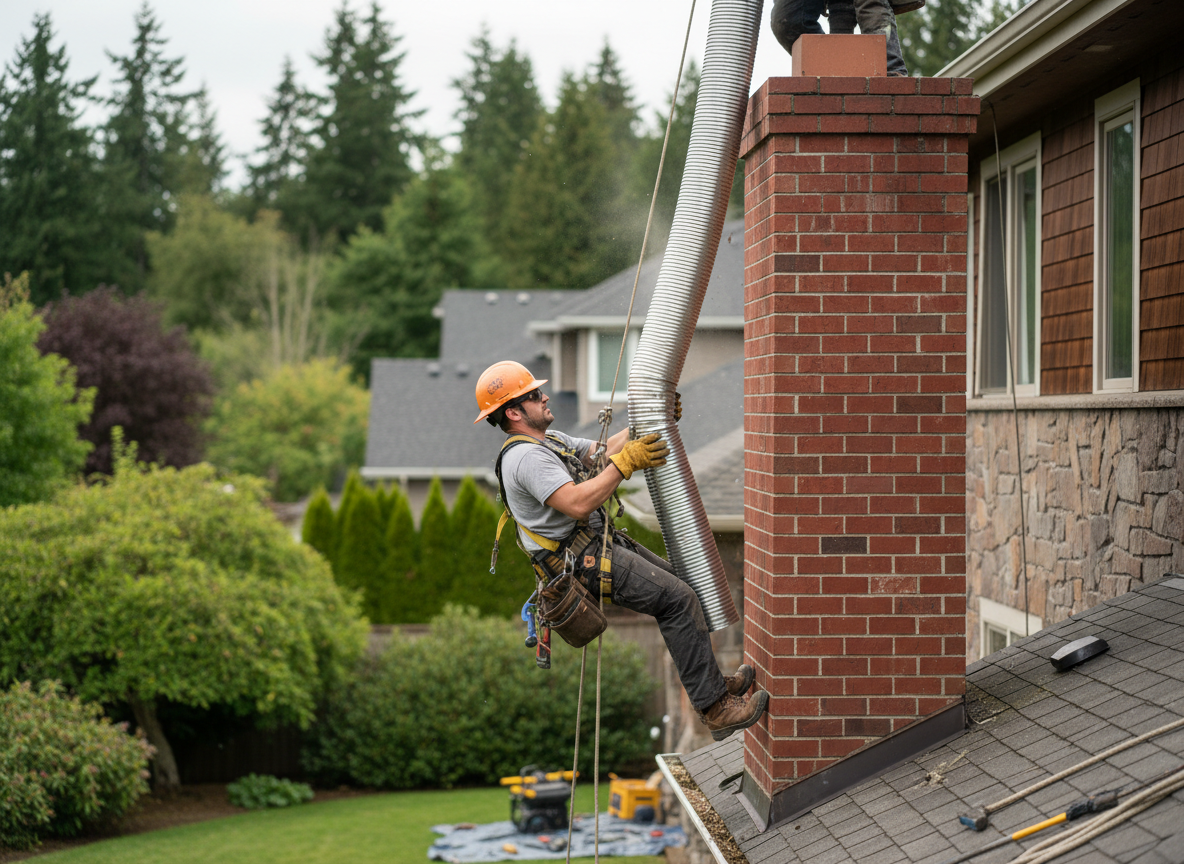
Gresham homes in Rockwood and Downtown often feature masonry chimneys from the mid-20th century that suffer from moisture penetration during the county's wet winters. Relining with stainless steel or cast-in-place materials seals the flue against rain and occasional flooding that seeps into mortar joints near landmarks like Gresham Pioneer Cemetery. Without relining, creosote mixes with water to accelerate spalling and carbon monoxide risks, especially when mild summers give way to prolonged damp periods.
Multnomah County building codes require liners to meet specific clearance and material standards when chimneys serve wood-burning appliances in older housing stock. In areas around Mt. Hood Community College, terrain slopes can direct runoff toward foundations, pushing water into chimney bases and forcing relining jobs to include base flashing upgrades. Technicians measure for proper draft after installation because Portland's prevailing winds interact with local hills to create variable pressure that affects liner sizing.
Edge cases include shared chimneys on duplexes in central Gresham where one unit's relining must not block the neighbor's flue, and homes near Portland city limits that fall under stricter environmental rules for emissions. Cast-in-place liners work well here because they fill irregular flues common in pre-1970 construction while resisting the freeze-thaw cycles that come with wet winters. Always verify the existing chimney structure can support the added weight before starting.
Seasonal Considerations
Wet winters increase the urgency of relining because water entering cracks freezes and widens gaps by spring. Homeowners in Rockwood notice draft problems first during the transition to mild summers when fireplaces see less use but moisture continues to accumulate.
Technician insight
In Gresham, the thing that catches most people out with chimney relining is how wet winters and occasional flooding push water into the base of chimneys on pre-1980 homes in Rockwood, turning small mortar cracks into full flue failures faster than in drier parts of Multnomah County.
Rockwood Duplex Chimney
Water stains appeared on ceilings during a wet winter. Inspection revealed a cracked flue allowing moisture from runoff near the property slope. A stainless liner was installed with improved base sealing. Draft improved and no further leaks occurred the following season.
How it works
- 1
Initial Assessment
Inspect the chimney interior and exterior for water damage, creosote, and structural issues common in Gresham's older masonry.
- 2
Flue Preparation
Clean and repair the existing flue to ensure the new liner fits properly in homes exposed to Multnomah County moisture.
- 3
Liner Installation
Insert stainless steel or cast-in-place liner sized for local draft conditions and secure it against flooding risks.
- 4
Final Testing
Perform smoke and draft tests to confirm performance before returning the chimney to service.
Pricing
Cost depends on chimney height, access, and liner type; request an on-site assessment for an upfront quote.