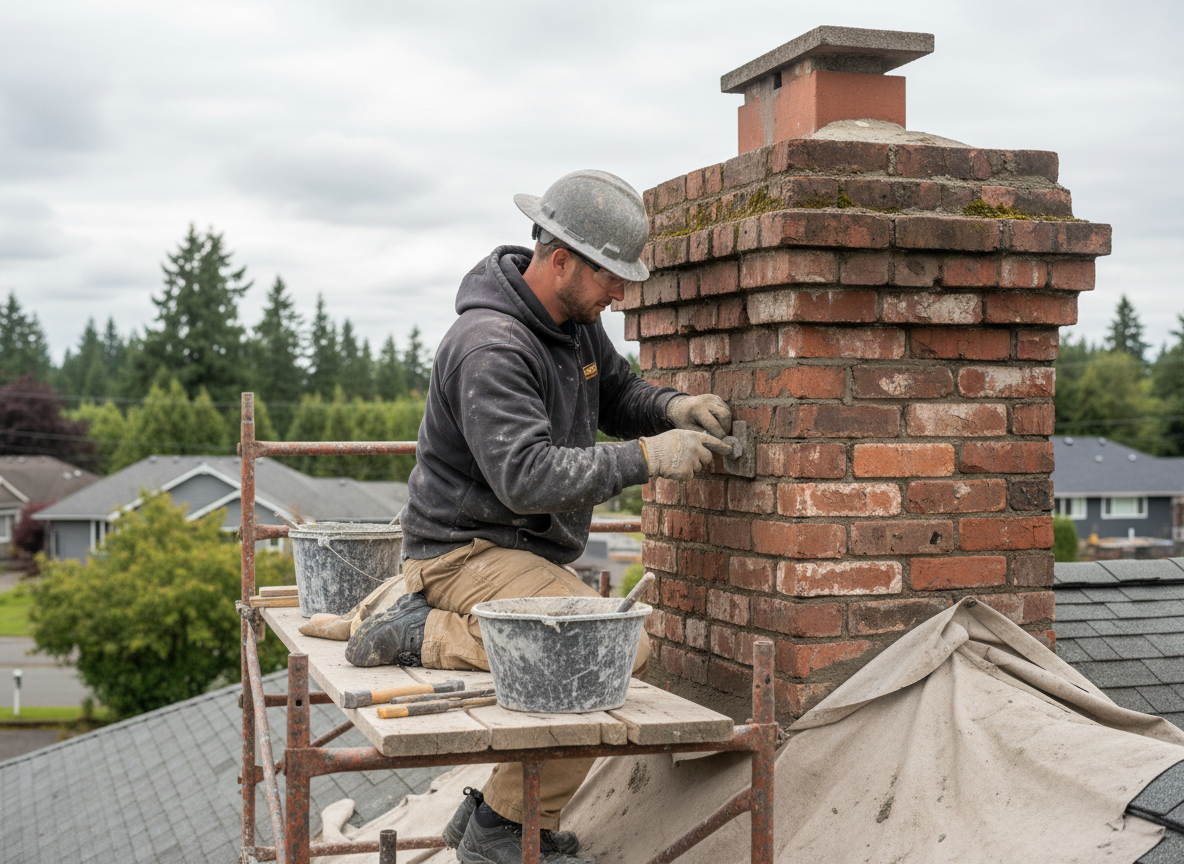
Gresham chimneys take a beating from the county's wet winters, where repeated freeze-thaw cycles and occasional flooding loosen mortar and let water reach the flue liner. Homes in Rockwood and Downtown often have brick stacks built before modern flashing standards, so water finds its way behind the crown and into the attic. We repoint with type N mortar matched to the original, rebuild deteriorated crowns using pre-cast concrete or cast-in-place methods, and re-seal flashing at the roofline to stop the cycle before it reaches interior walls.
Near Mt. Hood Community College and along routes into Portland, many two-story houses sit on sloped lots that direct runoff toward the foundation. This changes how we approach lower chimney sections; we check for efflorescence and spalled brick below the roof deck, then install new step flashing and cricket saddles where needed. The mild summers give us a short window to work before the next rain, so we stage materials on-site and complete most masonry repairs in one or two days.
When a crown has heaved or bricks have shifted, we remove the damaged course, clean the flue tile, and rebuild with stainless-steel ties and a proper slope for drainage. In Multnomah County, older chimneys frequently lack a cap or have a cracked one that funnels water straight down; replacing it with a concrete or stainless cap sized to the flue prevents the most common source of interior moisture. Every job includes a full sweep and camera inspection so the homeowner sees exactly where the water path began.
Technician insight
In Gresham, the thing that catches most people out with chimney masonry repair is how wet winters push water behind the flashing on homes built on the slight slopes common in Rockwood; once it reaches the sheathing, the leak shows up two stories down and homeowners think the roof is the problem when the chimney crown is the actual source.
Crown and Flashing Repair Near Gresham Pioneer Cemetery
Water stains appeared on a second-floor ceiling in a Downtown Gresham house after heavy winter rain. Inspection showed a cracked concrete crown and rusted step flashing letting water run down the flue exterior. We removed the damaged crown, rebuilt it with a sloped cast-in-place cap, replaced the flashing, and confirmed no further entry during a hose test.
How it works
- 1
Site Inspection
We climb the roof and examine the crown, flashing, and brick faces, then run a camera down the flue to locate hidden cracks.
- 2
Mortar and Brick Assessment
We test joint integrity and mark spalled or loose bricks, noting any water staining that reaches the attic or second-floor ceilings.
- 3
Material Match and Repair
We select matching brick and mortar, rebuild the crown or repoint joints, and install new flashing where the original has failed.
- 4
Final Sweep and Test
After the masonry cures we sweep the flue and confirm water no longer enters during a hose test.
Pricing
Upfront quote after inspection; price varies with height, extent of brick damage, and whether a new crown or cap is required.