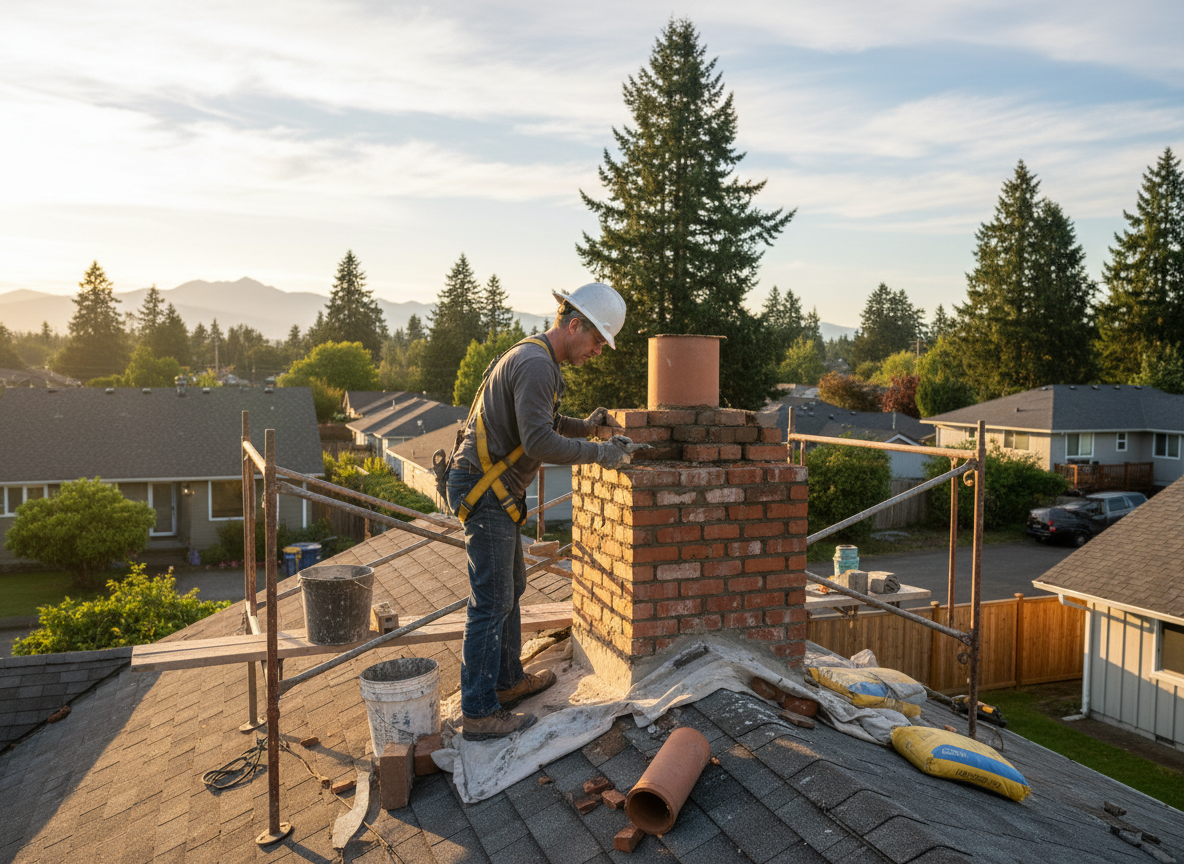
Gresham homes in neighborhoods like Rockwood and Downtown often feature older brick chimneys tied into asphalt or cedar roofs that see heavy rain from November through March. Water finds its way past failed flashing or cracked crown mortar, especially on slopes facing the prevailing winds that blow moisture up from the Portland side of Multnomah County. Once inside, the water rots sheathing and stains ceilings before homeowners notice.
Repair work here starts with removing the damaged flashing and cutting back rotted decking without disturbing the remaining roof. New step flashing is woven into the shingles, a new cricket is built if the chimney sits on the lower slope, and a fresh mortar cap is poured with a proper pitch. Mild summers give crews a short window to complete exterior work before the next wet season returns.
Homeowners near Mt. Hood Community College and Gresham Pioneer Cemetery frequently deal with ivy and tree debris that trap moisture against the chimney base. Clearing that growth and sealing the joint between the masonry and roof deck prevents the repeat leaks that show up every winter.
Code requires all roof penetrations to meet current Multnomah County standards for wind-driven rain, so crews install ice-and-water shield at least six feet up the roof plane on either side of the chimney during every repair.
Technician insight
In Gresham the thing that catches most people out with roof chimney repair is how quickly water from our wet winters pools behind the chimney on the north-facing slopes common in Rockwood. Older homes there often lack a cricket, so every heavy rain pushes water under the shingles and into the attic before the homeowner sees a ceiling stain.
Rockwood Chimney Leak After Winter Storms
Water stains appeared on the ceiling of a 1970s home in Rockwood after repeated flooding rains. Inspection showed failed flashing and no cricket on the north side of the chimney. Crew removed rotted decking, installed new step flashing and a cricket, then repoured the crown. No further leaks occurred the following winter.
How it works
- 1
Site Inspection
Technician climbs the roof to check flashing, crown condition, and any rot around the chimney base in Gresham weather.
- 2
Material Removal
Old flashing and damaged shingles are taken off, rotted decking is replaced, and the area is dried before new work begins.
- 3
Flashing and Cricket Installation
New copper or galvanized step flashing is woven into the roof, and a cricket is framed on the uphill side when needed.
- 4
Crown and Seal
A sloped mortar crown is poured and the joint between masonry and roof is sealed against wet Multnomah County winters.
- 5
Final Check
Roof is walked and hosed to confirm no water enters before the crew leaves the site.
Pricing
Upfront quotes after on-site inspection; price varies with roof pitch, chimney height, and extent of decking damage.