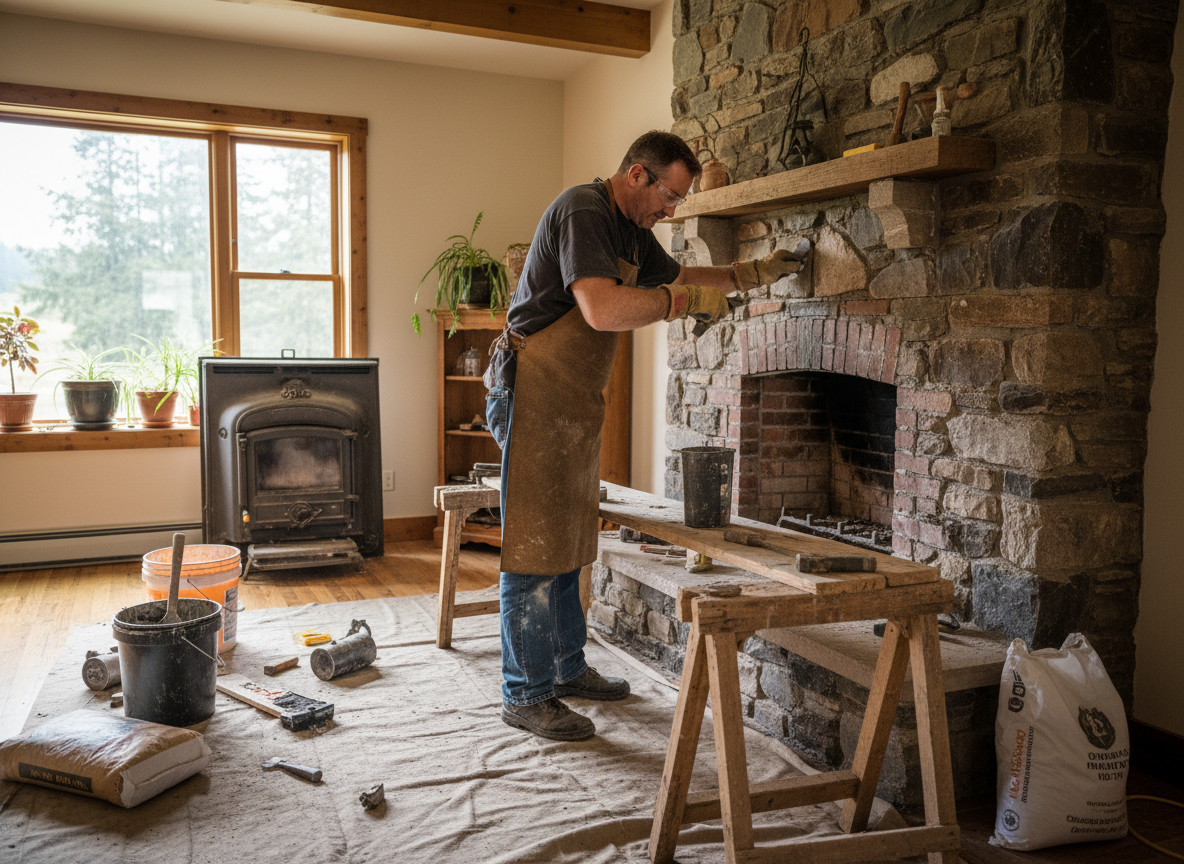
Gresham homes built decades ago in Rockwood and Downtown often feature brick fireplaces that absorb water during the region’s long wet winters and occasional flooding. Multnomah County’s mild summers do little to dry out hidden moisture trapped behind hearths and flues, so restoration work usually starts with checking for efflorescence, spalling brick, and rusted dampers before any cosmetic fixes. Near landmarks like Gresham Pioneer Cemetery or Mt. Hood Community College, many properties sit on older lots where soil movement adds stress to chimney bases, making full fireplace restoration more involved than simple tuckpointing.
Restoration here means removing loose mortar and damaged brick, then rebuilding with materials that handle repeated freeze-thaw cycles common in Portland’s shadow. We inspect the firebox liner and smoke chamber for cracks that allow carbon monoxide to migrate into living spaces, a frequent issue in Gresham’s stock of mid-century homes. When flooding has reached the foundation, we also evaluate the hearth slab for separation from the floor joists before closing the job.
Homeowners sometimes attempt DIY repointing with modern cement that traps more moisture against the original soft brick, accelerating future failure. Proper restoration uses lime-based mortars matched to the existing masonry and includes re-sealing the crown and flashing where roof runoff meets the chimney. These steps keep the fireplace functional through another decade of wet winters without repeated callbacks.
Technician insight
In Gresham, the thing that catches most people out with fireplace restoration is how wet winters push water behind the hearth in Rockwood homes built before modern flashing standards. Homeowners often repaint or patch the visible brick while the real problem stays inside the masonry, so the next heavy rain season brings it right back.
Fireplace Restoration After Winter Flooding
Water had wicked up through the base of a brick fireplace in a Downtown Gresham home near the cemetery. We found spalled brick and deteriorated mortar hidden behind the surround. After removing damaged material and rebuilding with lime mortar plus new flashing, the fireplace passed a draft test and no longer showed moisture stains.
How it works
- 1
Initial Assessment
We examine the firebox, damper, and surrounding masonry for water damage common after Gresham winters.
- 2
Moisture and Structural Check
Testing for efflorescence and movement in older Rockwood and Downtown homes to identify hidden issues.
- 3
Repair and Rebuild
Replacing damaged brick and mortar with compatible materials, then addressing flashing and crown.
- 4
Final Inspection and Cleanup
Verifying draft and safety before leaving the site.
Pricing
Upfront quotes after on-site inspection; cost depends on extent of water damage and brick replacement needed.