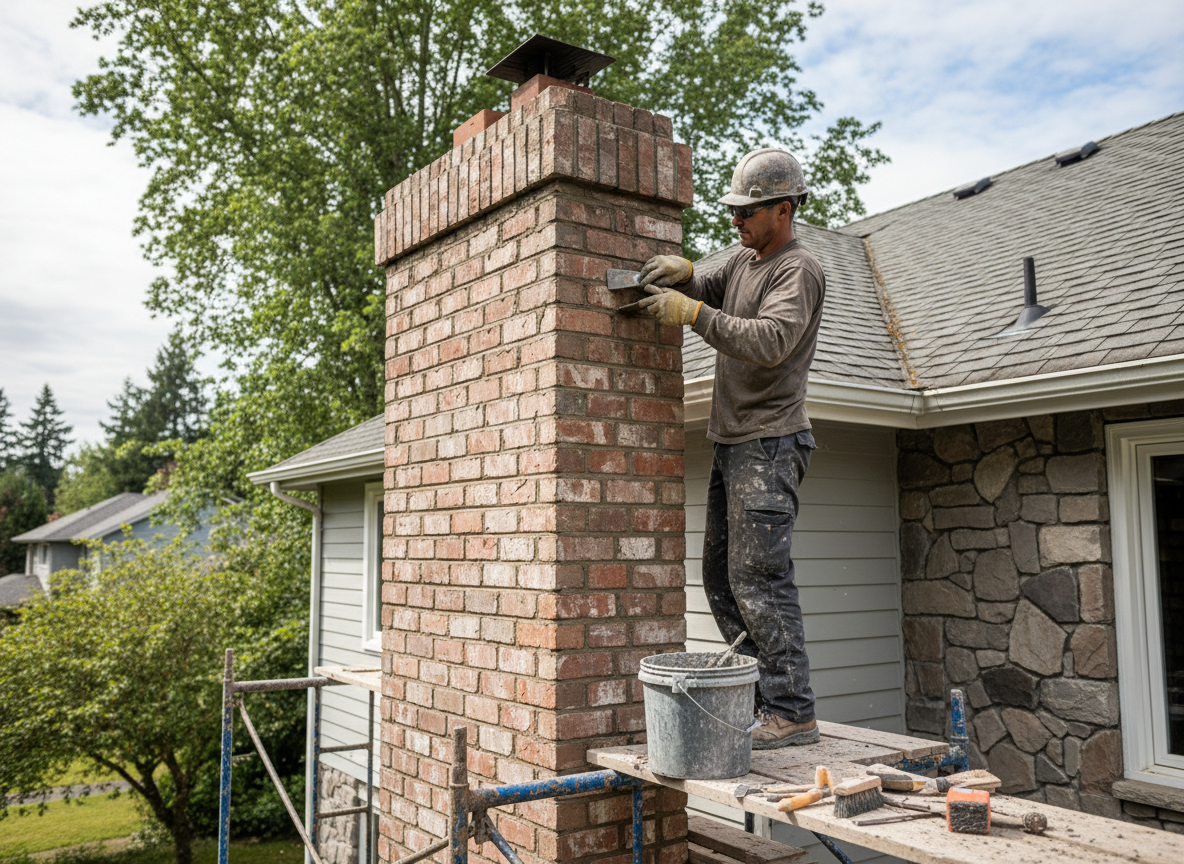
Gresham chimneys in neighborhoods like Rockwood and Downtown often date to mid-century builds near Gresham Pioneer Cemetery and Mt. Hood Community College. These structures face constant moisture from Multnomah County winters that bring prolonged rain and periodic flooding. Tuckpointing removes failed mortar and replaces it with fresh lime-based mixes matched to original brick, preventing water intrusion that leads to spalling and interior leaks during the shift to mild summers.
Flooding in low-lying sections of Gresham saturates soil around foundations, wicking upward into chimney bases and accelerating joint failure. Portland's proximity means many homes share similar brickwork vulnerable to freeze-thaw cycles even in mild winters. Proper tuckpointing requires raking joints to consistent depth, cleaning debris, and tooling new mortar to shed water away from the flue, a step that differs sharply from simple caulking often mistaken for repair.
Access challenges arise in older Gresham stock where chimneys sit close to property lines or mature trees common near Mt. Hood Community College. Scaffolding must navigate tight yards while protecting adjacent roofs during wet conditions. Matching mortar color and texture to existing work preserves the look of historic homes in Downtown without introducing modern additives that trap moisture and worsen damage over successive winters.
Technician insight
In Gresham, the thing that catches most people out with chimney tuckpointing is how wet winters and occasional flooding erode mortar at the base first in pre-1970 homes around Rockwood and Downtown, where homeowners often ignore rising damp until interior stains appear.
Rockwood Base Erosion
Water staining showed on an interior wall of a Rockwood home after heavy winter rain. Inspection revealed failed mortar at the chimney base where flooding had pooled against the foundation. We raked and repointed the lower joints with water-shedding profiles while protecting the surrounding brick. The homeowner reported no further leaks the following season.
How it works
- 1
Inspection and Joint Assessment
Examine chimney from crown to foundation, noting mortar condition, water staining, and any flooding-related erosion around the base in Gresham yards.
- 2
Mortar Removal
Rake out deteriorated joints to uniform depth without damaging brick faces, focusing on areas exposed to Rockwood's poor drainage patterns.
- 3
Cleaning and Preparation
Flush joints clear of debris and dust, then dampen surfaces to ensure new mortar bonds properly in Multnomah County's humid climate.
- 4
New Mortar Installation
Pack lime-based tuckpointing mortar into joints, tooling concave profiles that direct water away from the structure during wet winters.
- 5
Curing and Final Check
Allow proper set time protected from rain, then inspect for uniform appearance and water shedding before leaving the site.
Pricing
Cost depends on chimney height, number of faces, and extent of joint damage from local weather exposure.