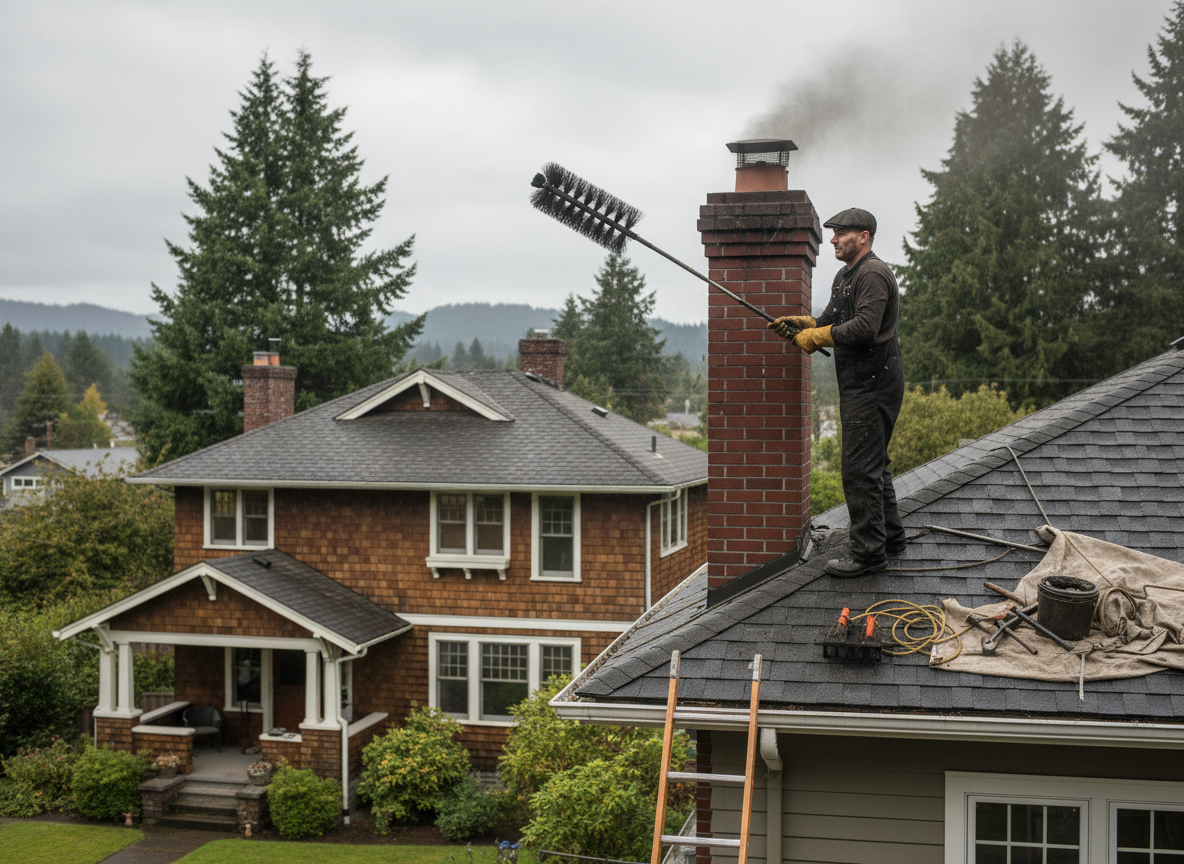
Gresham’s older housing stock in Rockwood and near Mt. Hood Community College often features masonry chimneys built before modern moisture barriers. Wet winters with occasional flooding allow water to penetrate flue liners, accelerating creosote glazing and mortar deterioration. A proper sweep must remove these deposits without dislodging loose bricks that could fall into the firebox or block the smoke chamber. Homeowners along the lower elevations near the Gresham Pioneer Cemetery see higher humidity levels that keep soot damp and harder to brush free.
Portland’s influence brings mild summers but rapid temperature swings that crack flue tiles in unlined chimneys common throughout Downtown Gresham. During a sweep we check for water staining at the smoke shelf caused by missing rain caps, a frequent finding after winter storms. Clearing the flue also reveals whether prior flooding has rusted the damper assembly or allowed debris to settle in the cleanout. These conditions require extra time to inspect the crown and flashing where Multnomah County roofs meet the chimney.
Access challenges appear in homes built on sloped lots near Rockwood where ladders must be set on uneven ground. We carry longer rods and specialized brushes sized for the narrower flues found in mid-century Gresham construction. After sweeping, we verify draft by checking for backdrafting at nearby windows, a problem worsened when newer insulation reduces air infiltration. This step prevents carbon monoxide risks that increase once wet wood is burned again in fall.
Technician insight
In Gresham the thing that catches most people out with chimney sweep near me is how quickly wet winters turn light soot into hard glazed creosote on the north-facing flues of Rockwood homes; once that layer forms, a standard brush won’t touch it and you’re looking at extra passes or a power sweep that homeowners don’t budget for until we’re already on the roof.
Downtown Gresham Creosote Glaze
A homeowner in Downtown Gresham called after noticing slow draft on cold mornings. We found heavy glazed creosote built up from repeated wet-wood burns during the prior winter. The sweep required an additional power-brush pass and careful removal around a cracked flue tile near the smoke chamber. After clearing the obstruction and confirming draft, the fireplace drew cleanly again without further masonry work.
How it works
- 1
Site Assessment
We arrive at the Gresham address, note roof pitch and ladder placement, then open the cleanout to gauge creosote depth before any brushing begins.
- 2
Flue Brushing
Using sectional rods sized for local flue diameters we work from the top down, collecting debris in the firebox while protecting surrounding masonry from falling chunks.
- 3
Inspection and Documentation
We examine the smoke chamber, damper, and crown for water damage common after Multnomah County winters, then photograph findings for the homeowner.
- 4
Final Cleanup and Draft Check
Debris is removed, the firebox is vacuumed, and we confirm proper draft before closing the cleanout and leaving the site.
Pricing
Upfront quotes reflect chimney height, access difficulty, and creosote level rather than flat rates.