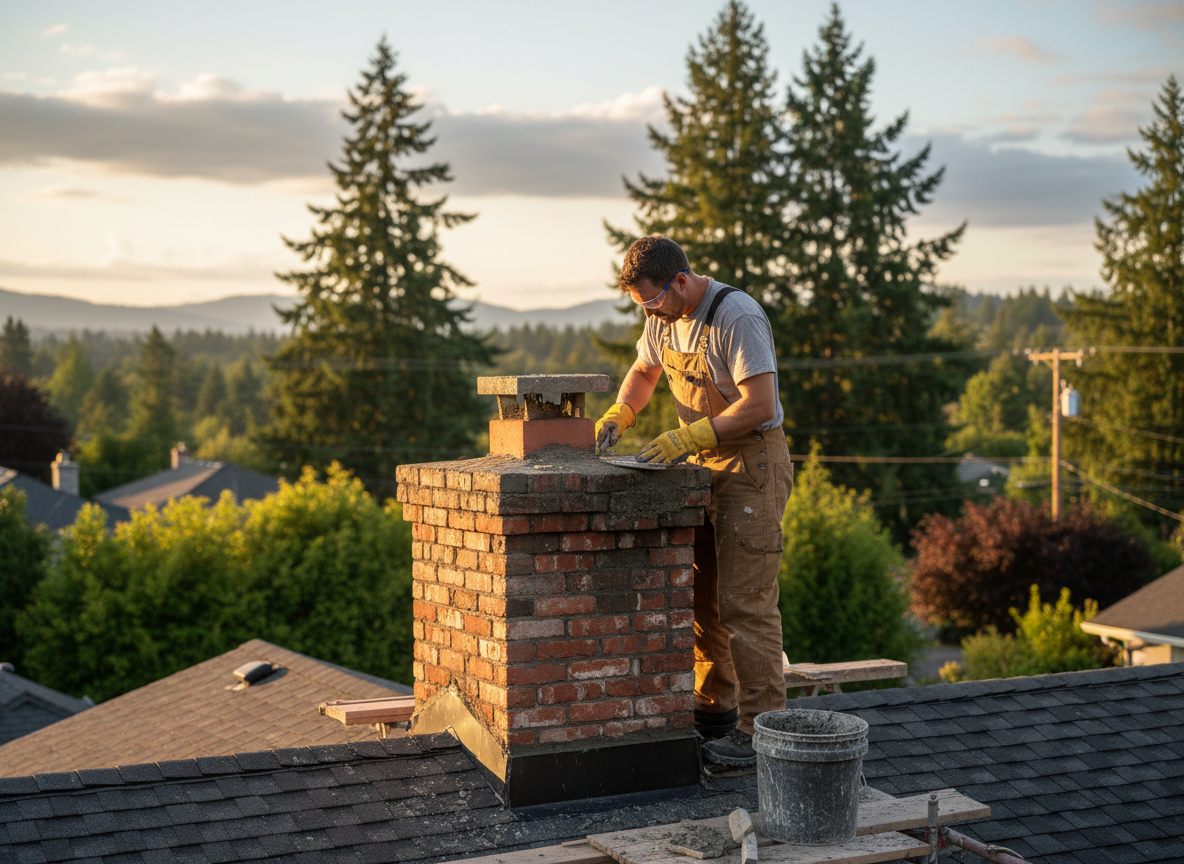
Gresham's wet winters bring repeated freeze-thaw cycles and occasional flooding that drive water deep into mortar joints on chimneys throughout Rockwood and Downtown. Homes here often date to the mid-20th century with original lime-based mortar that has softened over decades of exposure. When water reaches the flue liner or crown, it accelerates spalling and joint erosion, especially on chimneys serving wood stoves used during the long rainy season. Proper repair requires cutting out deteriorated mortar to sound material rather than simply applying surface patches that fail within one or two winters.
Mild summers allow crews to work steadily, but access remains an issue on the steeper lots near Gresham Pioneer Cemetery and around Mt. Hood Community College where mature trees and narrow driveways limit equipment placement. Technicians must match the original mortar's porosity and color to avoid trapping moisture behind a harder modern mix. In Multnomah County, building codes require proper flashing integration at the roofline during any repointing that reaches the base, preventing the water intrusion that commonly restarts the cycle after a single heavy rain event.
Edge cases appear when chimneys have been parged over previous repairs or when Portland-style clay flue tiles have shifted from soil movement common in the area. Removing the wrong layer can expose additional damage that only becomes visible once the scaffold is up. Crews carry both standard and historic mortar formulas on the truck so the job does not stall waiting for a special mix that matches the surrounding brick.
Technician insight
In Gresham, the thing that catches most people out with chimney mortar repair is how wet winters and occasional flooding around Rockwood let water wick up from the ground into the base joints on pre-1970s homes, especially those near Mt. Hood Community College where mature landscaping hides the damage until it reaches the living room ceiling.
Base Joint Failure After Winter Storms
Homeowner in Downtown Gresham noticed interior water stains after heavy rains. Inspection revealed softened mortar at the chimney base where runoff pooled against the foundation. Damaged joints were cut out and repointed with a lime-rich mix matched to the original brick. Flashing was reset to direct water away from the house. No further leaks appeared the following winter.
How it works
- 1
Site Inspection
Technician climbs the roof and examines every joint from crown to base, noting water staining, loose bricks, and flashing condition on the Gresham property.
- 2
Mortar Removal
Old mortar is cut out to a consistent depth using hand tools to avoid damaging brick faces common on older Rockwood chimneys.
- 3
Joint Repointing
New mortar is packed in layers, tooled to match existing profiles, and kept damp during cure to handle the next wet winter cycle.
- 4
Final Check and Cleanup
Chimney is tested for draft, debris removed from the yard, and the homeowner receives photos of completed work.
Pricing
Pricing varies with chimney height, extent of joint failure, and roof access difficulty on local lots.