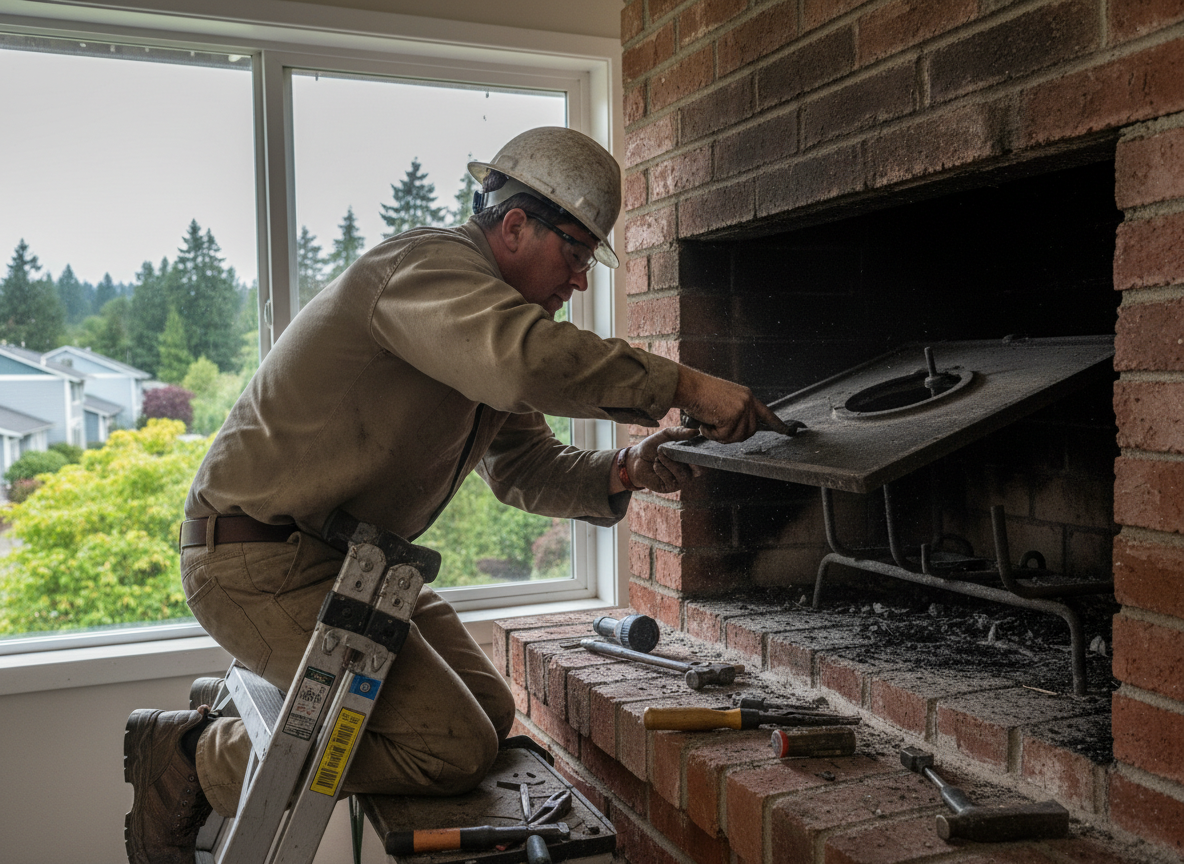
Gresham chimneys in older stock near Downtown and Rockwood often carry cast-iron or steel dampers installed before the 1980s that corrode from repeated moisture intrusion during Multnomah County winters. Water enters through hairline cracks in the crown or flue tile, then pools on the closed plate until the mechanism seizes. Mild summers do little to dry the assembly, so the first hard freeze locks the damper shut or leaves it partially open, pulling cold air and driving up heating costs.
Repair begins with a top-down inspection that checks the smoke chamber, flue lining, and damper pivot points for pitting or broken tension springs. In areas with occasional flooding, such as lower Rockwood lots, we also examine the cleanout for standing water that accelerates rust on the lower damper components. Replacement parts are chosen for stainless or heavy-gauge steel to resist the constant humidity that Portland weather funnels into the Columbia Gorge corridor.
Homeowners frequently discover the problem only after noticing drafts or smelling creosote indoors. We remove the old damper through the firebox when possible, avoiding full chimney rebuilds that many assume are required. Proper sealing of the new unit prevents the same moisture path from recurring, and we test draft with a smoke pencil under typical winter wind loads common around Mt. Hood Community College.
Code considerations in Gresham require the damper to close tightly enough to block exterior air while still allowing emergency venting if needed. We never leave a damper that cannot be operated from inside the home, because frozen or stuck plates create carbon-monoxide risks during the long wet season.
Technician insight
In Gresham, the thing that catches most people out with chimney damper repair is how wet winters let water run down the flue and pool on the plate in homes built before the 1970s in Rockwood and near the Gresham Pioneer Cemetery, turning a simple pivot into a rusted solid that no amount of tugging from below will free.
Seized Damper After Winter Storms
A homeowner in Rockwood reported persistent cold drafts. We found the cast-iron damper rusted shut from moisture that had entered through cracked crown mortar during repeated flooding. We removed the seized unit through the firebox, fitted a stainless replacement, and sealed the flue joint. The home now holds heat without pulling outside air.
How it works
- 1
Initial Assessment
We inspect the damper from the firebox and roof, checking for rust, seized pivots, and water staining caused by Gresham winters.
- 2
Access and Removal
The old damper is freed through the firebox or via the flue when crown access is required, taking care around aging mortar in pre-1970s chimneys common in Downtown.
- 3
Repair or Replacement
We install a stainless-steel replacement sized to the flue, lubricate moving parts, and seal joints against moisture that floods low-lying Rockwood properties.
- 4
Testing and Cleanup
Draft is verified with a smoke test, the firebox is cleaned, and the homeowner receives instructions on seasonal operation before we leave the site.
Pricing
Cost depends on chimney height, access difficulty, and whether the existing damper can be repaired or must be replaced; we provide an upfront quote after inspection.