2026-10-24 ·
How to Check Chimney Crowns for Cracks in Wet Climates
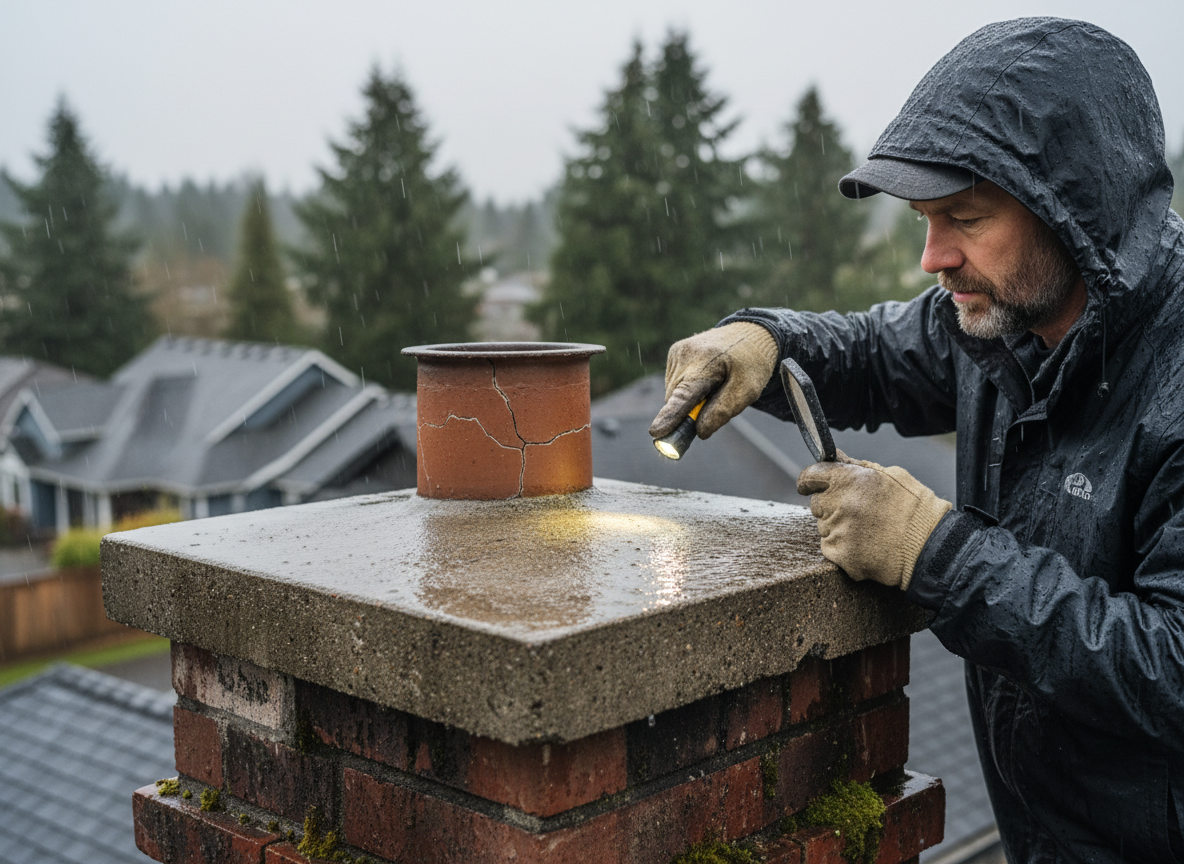
Check chimney crowns for cracks wider than 1/8 inch every six months, right after the wettest periods from November through February when Gresham sees prolonged rain and occasional flooding. This timing catches water penetration before it reaches the flue or masonry joints in homes throughout Rockwood and Downtown.
Preparing for Your Inspection
Walk the roof only on dry days with proper fall protection when examining crowns on Gresham homes built before 1980. These older structures near Mt. Hood Community College and the Gresham Pioneer Cemetery often feature single-wythe brick stacks that absorb more water during mild but rainy winters. Gather a flashlight, binoculars, moisture meter, and camera. Note the address at 1005 N Main Ave, Unit 101, Gresham, OR 97030 if you need follow-up support. Avoid inspections during active rain or when flooding affects access roads from Portland. Clear debris from the crown surface first so hairline fractures become visible. Focus on the sloped mortar cap that sheds water away from the flue opening, since standing water here leads directly to interior leaks in Multnomah County basements.
Visual Inspection Steps
Start at ground level with binoculars to scan the crown profile for missing mortar chunks or dark staining lines running down the brick. Move to the roof and look for separations where the crown meets the flue tiles, a common failure point after years of freeze-thaw cycles even in Gresham's mild climate. Run your finger along any visible seam; gaps larger than 1/4 inch require attention. Check the perimeter edge for spalling concrete or exposed aggregate, which signals repeated saturation from wet winters. Photograph each side and compare images over multiple seasons to track progression. In Rockwood neighborhoods, trees overhanging chimneys trap extra moisture and accelerate cracking, so note any vegetation contact during the walk-around.
Checking for Water Damage Signs
Press a moisture meter against the crown mortar and surrounding brick; readings above 18 percent indicate active water retention from Gresham's frequent winter storms. Look inside the attic or top floor for brown streaks on rafters directly below the chimney, a telltale sign that crown cracks have allowed rain to bypass flashing. Test the damper area for damp smells after heavy rainfall, especially in homes near the Columbia River influence where humidity stays elevated. In Downtown Gresham, older mortar mixes crumble faster under constant drip, creating pathways for water into the firebox. Track any efflorescence, the white powder that appears when salts leach out after repeated wetting and drying cycles through mild summers.
When to Schedule Professional Assessment
If cracks exceed 1/4 inch or moisture readings stay high after three dry days, contact a local masonry team for chimney crown repair. Persistent leaks often trace back to crown failure and may need chimney waterproofing to protect the full stack. Review typical repair ranges in our guide on what chimney repair typically costs in Gresham Oregon before deciding on scope. Homes in Fairview or near Mt. Hood Community College frequently require tuckpointing alongside crown work because original mortar has softened from decades of Multnomah County rain. Address issues before summer to avoid disrupting heating season.